Trusted Since 1994 in Sinchon, Seoul · 1:1 Personalized Eye Surgery, Facial Lifting & Anti-Aging by One Board-Certified Specialist
5.0 Verified Patient Satisfaction
en-US

Medical Guide
Surgical Rhinoplasty vs. Non-Surgical Nose Filler Guide
Compare surgical rhinoplasty vs. nose filler options in Seoul: what each changes, why filler cannot reduce nose size, risks, and recovery timelines.
Schedule a ConsultationSurgical Rhinoplasty vs. Non-Surgical Nose Filler: What Each Can and Cannot Change
Medically reviewed by Dr. Lee Eun Jung, MD, Board-Certified Plastic Surgeon
Patients researching nose job options often weigh surgical rhinoplasty against non-surgical nose filler—sometimes called liquid rhinoplasty—before deciding whether an injectable session or an operation fits their anatomy. While both approaches aim to improve nasal proportion and facial balance, they operate on fundamentally different mechanical principles. Surgical rhinoplasty reshapes, reduces, supports, or reconstructs the underlying nasal bone, cartilage, and internal septum, whereas non-surgical nose filler adds soft-tissue volume beneath the skin to alter surface contours temporarily.
At Yonsei Natural Beauty Aesthetic Surgical Clinic in Seoul, South Korea, that distinction defines how patients are evaluated. Injectable fillers can temporarily smooth select contour lines or camouflage minor surface depressions, but they cannot perform structural bone or cartilage modification and cannot generally reduce the size of the nose. Under the clinic's single-doctor care model, Dr. Lee Eun Jung—a board-certified plastic surgeon with more than 25 years of clinical experience and an Adjunct Professor of Plastic Surgery at Yonsei University College of Medicine—personally conducts every assessment, treatment, and follow-up so recommendations reflect actual nasal anatomy rather than a one-size-fits-all template.
Understanding the anatomical boundaries of rhinoplasty vs. nose filler helps clarify which concerns respond to added volume, which require permanent structural surgery, and how safety, longevity, and recovery compare across both nose job options.
How Structural Surgery and Injectable Fillers Work Differently
The practical difference between non-surgical rhinoplasty vs. surgery comes down to subtraction and reconstruction versus localized addition.
Surgical Rhinoplasty: Structural Remodeling
According to the American Society of Plastic Surgeons overview of rhinoplasty, surgical rhinoplasty modifies the bone, cartilage, and soft tissue that give the nose its shape and airway support. Depending on the degree and complexity of correction required, a surgeon selects either an open approach—using a small transcolumellar incision for full visualization of the nasal framework—or a closed approach through internal incisions.
Inside the nose, surgery can trim or suture overdeveloped tip cartilage, reposition or lengthen an upturned tip with cartilage grafts, file down or perform an osteotomy on a bony nasal hump, straighten deviated nasal bones, narrow the nostril base, or augment a low bridge using autologous cartilage (septal, ear, or rib cartilage) or a medical implant such as silicone. Surgical osteotomy itself can be executed through either an external or internal approach depending on bony anatomy; a systematic review and meta-analysis of 13 randomized controlled trials encompassing 1,008 rhinoplasty patients found comparable early postoperative eyelid edema, ecchymosis, and step-off deformity rates between external and internal lateral osteotomy techniques.
Non-Surgical Nose Filler: Camouflage by Volume Addition
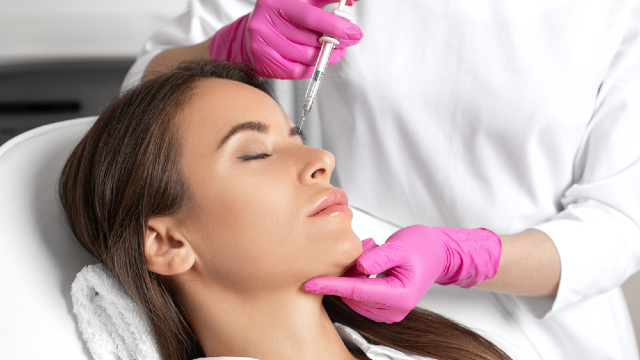
Non-surgical nose filler does not alter bone or cartilage. Instead, a clinician injects a soft-tissue dermal filler—almost always cross-linked hyaluronic acid (HA)—into targeted planes above the nasal bone or cartilage to raise depressed areas, smooth transitions, or create the visual illusion of a straighter bridge. In a 2024 systematic review encompassing 9,657 nonsurgical rhinoplasty patients, hyaluronic acid accounted for 96.76% of treatments, with calcium hydroxylapatite (CaHA) representing 1.22%.
At Yonsei Natural Beauty Aesthetic Surgical Clinic, facial dermal filler treatments are performed exclusively by Dr. Lee Eun Jung rather than delegated to nursing staff or non-physician injectors, drawing on clinical injectable experience dating back to Artecoll in Korea in 1996. For facial contouring in areas such as the cheeks, temples, tear troughs, lips, jawline, chin, and nasolabial folds, the clinic utilizes hyaluronic acid, CaHA, and poly-L-lactic acid (PLLA) depending on individual tissue goals. For the nose specifically, however, the clinic positions surgical Rhinoplasty by Nose Type as the definitive option when structural reshaping or size reduction is required, while clearly outlining the narrow, temporary scope of injectable nose contouring.
Side-by-Side Comparison: Surgical Rhinoplasty vs. Non-Surgical Nose Filler
Comparing the two approaches across mechanism, durability, airway impact, and recovery highlights why they are not interchangeable substitutes.
| Clinical Factor | Surgical Rhinoplasty | Non-Surgical Nose Filler |
|---|---|---|
| Core Mechanism | Reshapes, reduces, repositions, or augments bone and cartilage | Adds soft-tissue volume beneath the skin to camouflage contours |
| Can Reduce Nose Size | Yes—can narrow bridge, refine bulbous tip, and reduce alar width | No—adds volume and cannot physically shrink the nose |
| Functional Breathing | Can correct deviated septum or structural airway obstruction | Cannot correct internal septal deviation or valve collapse |
| Longevity | Intended as permanent structural change (normal aging continues) | Temporary; commonly 8–12 months for standard HA, varying by product |
| Reversibility | Not reversible without secondary revision surgery | HA filler can be dissolved with hyaluronidase; CaHA/PLLA are not rapidly reversible |
| Procedure Duration | Commonly 2–4 hours, depending on nose type and complexity | Typically under 1 hour in an outpatient visit |
| Anesthesia | General anesthesia or local anesthesia with IV sedation | Topical anesthetic or local anesthetic |
| Initial Downtime | Suture removal at 4–5 days; splint at ~1 week; stay 7–10 days | Routine daily activities often resumed the same day or next day |
| Full Result Timeline | Early definition after splint removal; final contour at 6–12+ months | Immediate volume change; settles fully over 1–2 weeks |
| Primary Safety Focus | Swelling, bruising, bleeding, infection, asymmetry, breathing changes, revision risk | Bruising, swelling, nodule formation, rare vascular occlusion, skin necrosis, vision loss |
What Non-Surgical Nose Filler Can—and Cannot—Change
Evaluating nose filler limits candidly prevents patients from pursuing injections for goals that only surgery can accomplish. A 2023 PRISMA systematic review of non-surgical rhinoplasty noted that while hyaluronic acid injections offer rapid profile adjustments and high short-term patient satisfaction for minor shape concerns, anatomical suitability and procedural risks strictly constrain their role.
Contour Goals That Nose Filler Can Address
When a patient's underlying nasal framework is relatively small or balanced apart from isolated depressions, carefully placed filler may temporarily achieve several limited optical changes:
- Mild dorsal hump camouflage: By placing small amounts of filler above (at the radix) and occasionally just below a small dorsal bump, the bridge line appears straighter in profile, even though the physical bump itself remains underneath.
- Low radix or shallow bridge elevation: Patients with a low starting point between the eyes or a mild bridge depression can gain modest height without surgical implants or cartilage grafts.
- Minor tip definition or support illusion: Placing small aliquots at the nasal spine, columella, or tip can subtly rotate or sharpen the appearance of a slightly drooping tip, provided the soft-tissue envelope is not overly tight.
- Selected post-rhinoplasty contour irregularities: In patients who already had surgical rhinoplasty and are left with a small localized indentation—especially along the middle third of the nose—filler is sometimes used to smooth the contour without a second operation. A 2025 systematic review of 2,048 post-rhinoplasty filler patients reported high satisfaction for minor postsurgical defects, though authors emphasized heightened caution because prior surgery alters blood supply and raises the risk of skin necrosis.
Regarding durability, a 2023 PRISMA literature review on nonsurgical rhinoplasty longevity found considerable variability across studies: six authors reported hyaluronic acid duration between 8 and 12 months, while other series documented longer persistence depending on filler rheology and depth. Across the clinic's broader dermal filler protocols, standard HA fillers generally last 6–12 months and remain reversible with hyaluronidase, whereas longer-duration HA formulations may last roughly 1–2 years and biostimulatory fillers such as CaHA or PLLA can persist beyond that timeframe with product-dependent reversibility.
Anatomical Limits: Why Nose Filler Cannot Reduce Size or Fix Structure
Equally important are the features that nose filler cannot change—regardless of injector skill or product choice:
- Nose filler cannot reduce nose size: Because dermal filler occupies physical space, adding gel to a large, wide, or prominent nose increases total volume. It cannot narrow wide nasal bones, trim bulky lower lateral cartilages, thin thick nasal tip skin, or reduce flared nostrils (alar base width). Attempting to mask a large hump or broad tip with repeated filler sessions often creates an overly wide, heavy, or tubular bridge—sometimes referred to as an overfilled "avatar" look.
- Cannot correct a crooked or deviated nose structurally: While filler can disguise minor optical shadowing along a mild deviation, it cannot straighten displaced nasal bones or a bent nasal septum.
- Cannot improve nasal breathing: Structural airway problems—such as a deviated septum, internal or external nasal valve collapse, or turbinate hypertrophy—require surgical realignment or cartilage support and do not improve with external filler injections.
- Unsuitable for compromised tissue or prior permanent implants: Patients with reduced skin elasticity, active skin inflammation, prior silicone implants, or scarred tissue planes from multiple surgeries face elevated risks of vascular compromise, infection, or contour distortion when injected.
What Surgical Rhinoplasty Can Change: Planning by Nose Type
When patients seek permanent nose reshaping, size reduction, or functional airway improvement, surgical rhinoplasty remains the only modality capable of modifying bone, cartilage, and soft tissue directly. At Yonsei Natural Beauty Aesthetic Surgical Clinic, surgical planning follows a customized Rhinoplasty by Nose Type framework rather than a standardized shape.
During a one-on-one consultation, Dr. Lee Eun Jung evaluates bridge height, tip projection and rotation, nasal bone width and symmetry, septal alignment, alar base width, skin thickness, and overall facial proportions. Noses are categorized clinically—such as bulbous, short, hooked, or deviated—and techniques are combined according to each anatomical component:
- Bulbous nose: When fullness stems from wide or overdeveloped tip cartilages and thick fibrofatty tissue, surgery may involve trimming excess tip cartilage, suturing the alar cartilages together for sharper definition, conservatively reducing tip fat, and allowing the overlying skin to contract. Filler cannot accomplish this reduction.
- Short or upturned nose: Correcting an over-rotated tip or inadequate nasal length requires releasing and repositioning the upturned alar cartilages downward, reinforcing the framework with structural cartilage grafts (such as septal, ear, or rib cartilage), and augmenting the bridge when indicated.
- Hooked nose or pronounced dorsal hump: True hump reduction removes excess bone and cartilage via filing or controlled osteotomy. In more extensive cases, reconstruction may incorporate autologous cartilage or silicone support to keep the dorsal profile smooth and stable.
- Deviated nose and functional obstruction: A visibly crooked nose frequently involves both twisted nasal bones and a deviated internal septum. Surgery can combine osteotomy to reposition the nasal bones with septoplasty to straighten septal cartilage and support the airway. In a prospective cohort study of 625 patients undergoing functional nasal surgery, including dual functional and cosmetic septorhinoplasty, participants achieved sustained, statistically significant improvements in Nasal Obstruction Symptom Evaluation (NOSE) scores through 24 months postoperatively.
- Wide nostrils and alar flare: Alar base reduction surgically trims and repositions small wedges of tissue at the nostril sill or alar crease to bring nostril width into proportion with the intercanthal distance.
- Revision after prior surgery or implants: When a previous rhinoplasty or silicone implant leads to contracture, asymmetry, or dissatisfaction, structural revision removes compromised material and rebuilds support—often using autologous rib cartilage, as illustrated in a clinical study of 28 revision rhinoplasty patients managed with molded costal cartilage and septal extension grafts over an average 18.3-month follow-up.
Prospective patients reviewing patient reviews or the clinic's before-and-after photo gallery should keep in mind that skin thickness, cartilage strength, and healing response vary significantly between individuals, making direct anatomical assessment essential before selecting surgical materials or an open versus closed approach.
Safety Profiles, Vascular Risks, and Surgical Complications
Neither surgical rhinoplasty nor non-surgical nose filler is risk-free, and their complication profiles differ substantially in timing, mechanism, and emergency management.
Vascular and Soft-Tissue Risks of Nose Filler
Common, temporary reactions after filler injection include localized swelling, redness (erythema), bruising, tenderness, mild asymmetry, and minor palpable irregularities, which typically settle over several days to two weeks. In the 2024 systematic review of 9,657 liquid rhinoplasty patients, erythema and swelling were the most frequent minor events (27.95%).
Far more serious is vascular occlusion. The external nose contains a dense, variable network of arteries—including the dorsal nasal, angular, and lateral nasal arteries—that communicate directly with the ophthalmic and internal carotid circulation. If filler is inadvertently injected into an artery or compresses a vessel wall, blood flow is blocked, creating immediate risk of tissue ischemia, skin necrosis (most commonly on the nasal tip or ala), permanent scarring, or retrograde embolization causing vision loss or stroke. In the 2024 review cited above, severe arterial occlusion occurred in 0.27% of cases.
A 2025 systematic review and meta-analysis on vascular occlusion risk factors identified the nose, glabella, and nasolabial folds as the facial regions most frequently implicated. Timely recognition of warning signs—such as disproportionate pain, skin blanching, mottled discoloration, or delayed capillary refill—and prompt intervention are critical: the meta-analysis reported an 84.2% partial or total recovery rate when hyaluronidase was used for HA-related occlusions, whereas treatment delays beyond five days correlated with permanent tissue deficits. Additionally, cadaver and clinical research comparing injection instruments (PMID 32991042) underscores that whether a needle or blunt cannula is used, depth precision against bone or cartilage and mastery of nasal vascular anatomy remain paramount—and distorted anatomy from prior surgery increases complication risk.
At Yonsei Natural Beauty Aesthetic Surgical Clinic, filler risk mitigation relies on physician-only injection by Dr. Lee Eun Jung, careful anatomical mapping, real-time monitoring during placement, and cannula use where indicated. Patients with active skin infection or inflammation, bleeding disorders, a history of severe allergic reactions or anaphylaxis, or allergies to local anesthetics or filler ingredients should delay or avoid filler treatment.
Surgical Risks and Contraindications of Rhinoplasty
Surgical rhinoplasty carries recognized operative and postoperative risks that patients must weigh against its permanent benefits:
- Expected early recovery effects: Swelling, bruising (more pronounced around the eyes for 2–3 weeks when osteotomy is performed), nasal congestion, temporary difficulty breathing through the nose, and temporary numbness or altered skin sensation.
- Less common surgical complications: Bleeding, infection, anesthesia-related reactions, visible or unfavorable scarring (in open or alar base incisions), persistent asymmetry, breathing difficulties, septal perforation, changes in the sense of smell, long-term implant considerations (when silicone is used), aesthetic dissatisfaction, and the possibility of revision surgery.
- Who should postpone or avoid surgery: Individuals who are medically unfit for general anesthesia or IV sedation, have active nasal or systemic infections, have uncontrolled medical conditions, continue smoking (which impairs wound healing and blood flow), or hold unrealistic expectations about surgical perfection.
Recovery, Travel Planning in Seoul, and Continuity of Care

For U.S. and international patients comparing rhinoplasty Korea options, recovery logistics and post-procedure monitoring strongly influence trip planning.
Surgical Rhinoplasty Timeline in Seoul
At Yonsei Natural Beauty Aesthetic Surgical Clinic, surgical rhinoplasty typically takes 2–4 hours under general anesthesia or local anesthesia with IV sedation, following the clinic's streamlined 1-day surgery model (meaning no overnight hospitalization is required for applicable procedures). Postoperative milestones follow a predictable sequence:
- Days 4–5: Scheduled suture removal personally overseen by Dr. Lee Eun Jung.
- Approximately 1 week: Removal of the external nasal splint, revealing initial contour changes despite residual swelling.
- Days 7–10: Recommended stay in Seoul for surgical rhinoplasty patients before flying home, once the splint is off and early swelling has stabilized.
- Weeks 2–3: Periorbital bruising from osteotomy cases generally resolves, and patients gradually resume light social routines while continuing to avoid contact sports, nasal trauma, and glasses resting on the nasal bridge.
- Months 6–12 (or longer): Gradual resolution of deeper soft-tissue edema, with nasal tip swelling sometimes taking up to 12 months to fully refine into the final contour.
Non-Surgical Filler Recovery and Continuity
Dermal filler appointments generally take under an hour on an outpatient basis under topical or local anesthesia, with most patients returning to normal daily activities the same day or the following day. Mild swelling or bruising improves within several days, and the settled contour becomes clear within 1–2 weeks. Because international travel timelines after facial injectables depend on the specific product, injection plane, and follow-up plan, stay length should be confirmed individually before booking flights.
Single-Doctor Oversight and Post-Return Support
Founded in 1994 and located at 5th Floor, Room 502, 109 Sinchon-ro, Seodaemun-gu, Seoul, Yonsei Natural Beauty Aesthetic Surgical Clinic is a Ministry of Health and Welfare Registered Medical Institution for Attracting Foreign Patients (Business Registration No. 110-17-85532). Dr. Lee Eun Jung personally manages consultation, surgery or injection, suture removal, and follow-up—with no substitute or ghost surgeons—and deliberately limits daily patient volume for individualized attention.
International patients receive English-language support from coordinator Oh Hwa-jeong alongside translated medical documents, and can reach the clinic via the online contact page, phone (+82 2 365 4552 or +82 2 365 4553), or email (info@yonseinaturalbeautyclinic.com) during Korea Standard Time hours (Monday–Friday 09:30–17:30 KST; Saturday 09:30–13:00 KST). Before leaving Seoul, patients should confirm remote follow-up instructions; if severe or worsening pain, signs of infection, sudden vision changes, or heavy bleeding occur after returning to the United States, patients should seek immediate local emergency medical care rather than waiting for an overseas reply.
The Bottom Line
- Volume addition vs. structural change: Non-surgical nose filler adds soft-tissue volume to camouflage mild dorsal humps, low bridges, or minor contour depressions temporarily, whereas surgical rhinoplasty permanently reshapes bone, cartilage, tip support, and nostril width.
- Nose filler cannot make a nose smaller: Because filler occupies physical space, it cannot narrow a wide bridge, shrink a bulbous tip, shorten an elongated nose, or correct a deviated septum and nasal airway obstruction.
- Vascular safety requires anatomical expertise: Although nose filler involves minimal downtime compared with surgery's 7–10 day Seoul stay and 6–12 month maturation timeline, the nose carries rare but serious vascular occlusion risks (skin necrosis or vision loss) that demand physician-only injection and immediate hyaluronidase readiness.
- Individual anatomy determines the right option: Choosing between rhinoplasty vs. nose filler starts with a direct evaluation by a board-certified plastic surgeon—such as Dr. Lee Eun Jung's single-doctor consultation in Seoul—to match technique, safety precautions, and travel timing to your nasal structure.
Frequently Asked Questions
Can non-surgical nose filler make a wide or bulbous nose look smaller?
No. Because dermal fillers add volume beneath the skin, they cannot physically reduce bone width, bulky tip cartilage, thick nasal skin, or wide nostrils. While optical highlights on a flat bridge can sometimes create a subtle illusion of definition, trying to shrink a genuinely wide or bulbous nose with filler typically adds bulk and makes the nose appear larger; structural surgical reduction is required to decrease nasal dimensions.
How long do nose filler results last compared with surgical rhinoplasty?
Surgical rhinoplasty produces permanent structural modifications to bone and cartilage, with final contour maturation taking 6–12 months or longer as tip swelling resolves, though natural facial aging continues. By contrast, hyaluronic acid nose fillers are temporary; published literature commonly reports durations of roughly 8–12 months (with some longer-duration HA formulations lasting 1–2 years), requiring periodic repeat treatments to maintain the contour.
Can you get surgical rhinoplasty later if you already had nose filler?
Yes, in many cases, but the filler must be accounted for during surgical planning. Hyaluronic acid filler can either be allowed to metabolize naturally or be dissolved with hyaluronidase ahead of surgery so the surgeon can evaluate the true underlying bone and cartilage framework accurately without residual gel distorting landmarks or tissue planes.
Is non-surgical nose filler safer than surgical rhinoplasty?
Each option carries distinct risks rather than one being universally risk-free. Surgical rhinoplasty involves operative considerations such as anesthesia, 2–3 weeks of potential osteotomy bruising, infection, scarring, breathing changes, or possible revision surgery. Non-surgical nose filler avoids incisions and general anesthesia, but the nose's rich arterial connections to the eye mean inadvertent intravascular injection carries a rare risk of vascular occlusion, skin necrosis, or vision loss—making anatomical expertise and emergency preparedness essential.
Can nose filler fix a deviated septum or improve nasal breathing?
No. Dermal filler sits outside the nasal skeleton in the superficial soft tissues and cannot straighten a crooked internal septum, widen a narrowed bony vault, or support collapsed internal nasal valves. Patients experiencing nasal airway obstruction alongside cosmetic concerns require structural surgical intervention, such as rhinoplasty combined with septoplasty.
How long should international patients stay in Seoul for surgical rhinoplasty?
For surgical rhinoplasty at Yonsei Natural Beauty Aesthetic Surgical Clinic, international patients are generally advised to plan a stay of up to 7–10 days in Seoul. This window accommodates the 2–4 hour same-day procedure, suture removal around days 4–5, external nasal splint removal at approximately one week, and early healing checks with Dr. Lee Eun Jung before clearing air travel home.
This article is provided for informational purposes only and is not a substitute for an in-person evaluation or self-diagnosis. Individual suitability, risks, and recovery timelines vary and must be discussed directly with a board-certified plastic surgeon. All medical procedures at Yonsei Natural Beauty Aesthetic Surgical Clinic are performed in South Korea under Korean medical regulations.
References
- Nonsurgical Rhinoplasty: An Updated Systematic Review of Technique, Outcomes, Complications, and Its Treatments
- Non-Surgical Rhinoplasty After Rhinoplasty: A Systematic Review of the Technique, Results, and Complications
- Non-surgical Rhinoplasty (NSR): A Systematic Review of Its Techniques, Outcomes, and Patient Satisfaction
- The longevity of the nonsurgical rhinoplasty: A literature review
- Cannula versus needle in medical rhinoplasty: the nose knows
- Risk Factor Analysis for Vascular Occlusions After Dermal Filler Injections: A Systematic Review and Meta-Analysis
- Methods of Lateral Osteotomy in Rhinoplasty: An Updated Systematic Review and Meta-Analysis of Randomised Controlled Trials
- Improvement in Snoring-Related Quality-of-Life Outcomes After Functional Nasal Surgery
- Revision Rhinoplasty Using Glued Diced Costal Cartilage Shaped With Mold for Management of Complicated Silicone Rhinoplasty
- Rhinoplasty
More Articles
Continue reading clinical guides from Yonsei Natural Beauty.

Understanding Rhinoplasty and What It Involves
Learn what rhinoplasty involves, including how nose surgery can address nasal shape, proportions, and functional concerns, as well as what patients can expect before and after the procedure
Learn More

Facial Lifting Explained: Who Should Consider It
Learn how facial lifting works, who may benefit, what to expect, and key factors to consider before treatment. Discover if facial lifting is right for you.
Learn More

Anti-Aging Eye Surgery: What Recovery Really Looks Like
Learn what Anti-Aging Eye Surgery recovery really looks like, including healing stages, downtime, and results. Know what to expect and plan with confidence.
Learn More