Trusted Since 1994 in Sinchon, Seoul · 1:1 Personalized Eye Surgery, Facial Lifting & Anti-Aging by One Board-Certified Specialist
5.0 Verified Patient Satisfaction
en-US


Medical Guide
Understanding Rhinoplasty and What It Involves
Learn what rhinoplasty involves, including how nose surgery can address nasal shape, proportions, and functional concerns, as well as what patients can expect before and after the procedure
Schedule a ConsultationWhat Is Rhinoplasty?
Rhinoplasty is a surgical procedure designed to reshape, resize, or restructure the nose. It can address the bridge, tip, nostrils, or overall proportions of the nose, and in some cases can also improve airflow when structural issues affect breathing. Requests generally fall into two categories: aesthetic concerns, such as a dorsal hump or asymmetrical tip, and functional concerns, such as a deviated septum. Many patients seek a combination of both.
The nose is made up of both bone and cartilage — the upper third is primarily bony structure, while the middle and lower thirds are shaped largely by cartilage. This distinction matters clinically, since bone and cartilage respond differently to surgical modification and heal on different timelines; a dorsal hump reduction, for instance, involves reshaping bone, while tip refinement works almost entirely with softer cartilage. Rhinoplasty is also generally divided into primary cases, a patient's first nose surgery, and revision cases, performed to adjust the outcome of a previous procedure. Revision surgery tends to be more complex due to scar tissue and previously altered cartilage, so patients considering a second procedure should discuss any prior nasal surgery in detail during consultation.
Why People Consider Rhinoplasty
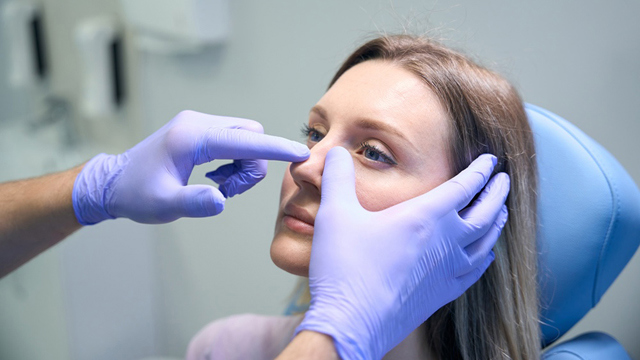
The nose has a significant influence on how the face is perceived as a whole. A bridge that is too prominent, a tip that droops, or nostrils that appear uneven can affect a person's confidence in photographs or everyday interactions. Others pursue rhinoplasty for medical reasons, including chronic nasal congestion or breathing difficulty linked to structural abnormalities. Regardless of the motivation, the underlying goal of modern rhinoplasty is the same: a result that looks proportionate and natural rather than obviously "operated on."
Some of the most common concerns raised during consultation include a dorsal hump along the bridge, a nose that appears too wide from the front, a bulbous or poorly defined tip, or visible asymmetry that becomes more noticeable in photographs than in the mirror. Others are concerned less with shape and more with proportion — a nose that may be objectively "normal" in isolation but appears large or small relative to the chin, forehead, or overall facial length, which is why an experienced surgeon evaluates the nose in the context of the whole face rather than as an isolated feature.
On the functional side, structural issues such as a deviated septum or a narrow nasal valve can restrict airflow and contribute to chronic congestion or disrupted sleep. When these concerns coexist with aesthetic ones, a combined procedure — sometimes called septorhinoplasty — can address both breathing and appearance in a single surgery, which is often more efficient than undergoing two separate procedures.
Who Is a Good Candidate?
Not everyone who is unhappy with the shape of their nose is automatically a suitable candidate for surgery. Good candidates typically share several characteristics:
- Facial growth is complete, generally meaning the patient is past adolescence
- General health is stable, without uncontrolled conditions that would complicate healing
- Expectations are realistic — the patient understands that rhinoplasty refines rather than transforms the face
- There is a specific, identifiable concern, whether aesthetic (shape, size, symmetry) or functional (breathing)
- The patient is a non-smoker or willing to pause smoking, since smoking can impair healing
Skin thickness is another factor surgeons weigh carefully. Thinner skin shows fine structural changes more clearly, producing sharper results but also making minor irregularities more visible; thicker skin softens the visibility of structural work but can take longer for swelling to resolve. Certain medical conditions and medications also factor into candidacy — bleeding disorders and medications that impair healing may need to be addressed beforehand, so patients are generally asked to disclose their full medical history, including prior facial trauma or nasal surgery.
A thorough consultation is the only reliable way to determine candidacy, typically including a physical examination, a review of medical history, and a discussion of the patient's goals in relation to other facial landmarks such as the chin and forehead.
The Consultation and Procedure Process
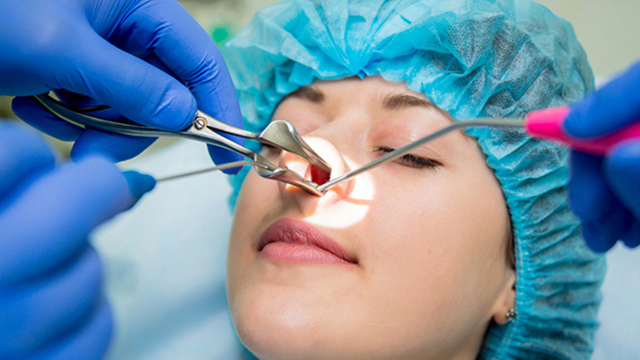
At Yonsei Natural Beauty Aesthetic Surgical Clinic, evaluations are conducted directly by Dr. Lee rather than delegated to a separate consulting team, allowing the surgeon who will ultimately perform the procedure to also be the one assessing the patient's nasal structure and facial proportions from the very first visit.
Generally speaking, the rhinoplasty process follows several stages:
1. Initial Consultation
The surgeon examines the nose externally and, when relevant, internally to assess septal alignment and airway structure. Photographs and sometimes imaging are used to plan the approach, and the patient's goals and any functional breathing complaints are discussed in detail.
2. Surgical Planning
Based on the patient's anatomy and goals, the surgeon determines whether an open or closed technique is appropriate, and whether cartilage grafting will be needed for a stable, long-lasting result. An open technique uses a small incision across the columella, the strip of skin between the nostrils, giving a fuller surgical view and is often preferred for complex cases; a closed technique places incisions entirely inside the nostrils for less external scarring but a more limited view. Neither approach is universally superior — the choice depends on the individual case.
3. The Procedure Itself
Rhinoplasty is performed under anesthesia and can take one to a few hours depending on complexity. The surgeon reshapes the bone and cartilage framework according to the plan, and where additional support is needed — for example, to strengthen a weakened tip — cartilage may be taken from elsewhere in the nose and used as a graft.
4. Immediate Aftercare
A splint or cast is typically applied to support the new shape while initial swelling subsides, and patients are given instructions on activity restrictions, including keeping the head elevated and avoiding bending over or heavy lifting.
The Value of a Continuous, Doctor-Led Approach
One detail that distinguishes the experience at Yonsei Natural Beauty Aesthetic Surgical Clinic is its one-doctor treatment model. Rather than rotating patients through different surgeons at different stages, the clinic is structured so that the same physician handles the consultation, the procedure, and the follow-up visits. For a procedure like rhinoplasty, where subtle surgical adjustments are informed by the detailed assessment made beforehand, this continuity helps ensure the plan discussed in consultation is the plan carried out in the operating room, and that post-operative concerns are addressed by someone already familiar with the case.
This model also has value during recovery, since follow-up visits often involve small observations — how the tip is settling, whether swelling is resolving evenly — that are easiest to track when the same physician who performed the surgery reviews progress. The clinic's decision to intentionally limit daily patient volume is directly connected to this model, allowing longer, uninterrupted consultation and procedure times.
About Dr. Eun-jung Lee

Dr. Lee has practiced plastic surgery for over 25 years and holds a PhD in Medicine along with a Master's Degree in Law, from Yonsei University and Korea University respectively. She serves as a Clinical Professor at Yonsei University College of Medicine and holds memberships in several professional bodies, including the Korean Society of Plastic and Reconstructive Surgeons, the Korean Society for Aesthetic Plastic Surgery, and the International Society of Plastic Surgeons.
Her academic and legal training contributes to a consultation approach that emphasizes clear communication, informed consent, and transparency about what a procedure can and cannot achieve — a meaningful distinction in aesthetic surgery, where a surgeon's ability to explain trade-offs clearly often matters as much as technical skill. Every consultation, evaluation, and follow-up visit is handled personally by Dr. Lee rather than delegated to supporting staff, consistent with the clinic's broader one-doctor treatment philosophy.
Recovery, Safety, and Realistic Outcomes
Recovery from rhinoplasty varies by individual and by the extent of the work performed, but general patterns are common to most cases. Visible swelling and bruising around the eyes and nose are typical in the first one to two weeks and tend to be more pronounced when bone work was involved. A splint is usually worn for about a week to protect the new structure, after which most bruising has faded, though subtle swelling remains present much longer than it is visible to others.
Most patients return to non-strenuous daily activities within one to two weeks, though strenuous exercise and contact sports are generally avoided for four to six weeks or longer, since increased blood flow and impact risk can affect healing. Final results take shape gradually, with the tip often taking up to a year to reach its fully settled shape — a normal part of healing rather than a sign that something is wrong.
As with any surgical procedure, rhinoplasty carries risks, including infection, bleeding, asymmetry, or the need for revision surgery in some cases. Functional risks specific to nasal surgery can include temporary or, rarely, persistent changes to breathing if the internal structure is not properly supported during healing. A careful pre-operative evaluation, an experienced surgical approach, and close post-operative monitoring all play a role in minimizing these risks.
Patients considering rhinoplasty are encouraged to have a detailed conversation with their surgeon about what a realistic outcome looks like for their specific anatomy, rather than relying on generalized expectations drawn from photographs of other patients, since facial proportions and nasal structure differ enough from person to person that one patient's result may not translate directly to another.
Scheduling a Consultation
For patients considering rhinoplasty, a personal consultation remains the most reliable way to understand what the procedure could realistically achieve, since no two noses — or the faces surrounding them — are identical. At Yonsei Natural Beauty Aesthetic Surgical Clinic in Seodaemun-gu, Seoul, prospective patients can meet directly with Dr. Eun-jung Lee to discuss their nasal structure, their goals, and whether rhinoplasty is an appropriate option for their circumstances. Consultations are held Monday through Friday from 9:30 AM to 5:30 PM and Saturday from 9:30 AM to 1:00 PM.
More Articles
Continue reading clinical guides from Yonsei Natural Beauty.
Understanding Rhinoplasty and What It Involves
Learn what rhinoplasty involves, including how nose surgery can address nasal shape, proportions, and functional concerns, as well as what patients can expect before and after the procedure
Learn More

Facial Lifting Explained: Who Should Consider It
Learn how facial lifting works, who may benefit, what to expect, and key factors to consider before treatment. Discover if facial lifting is right for you.
Learn More

Anti-Aging Eye Surgery: What Recovery Really Looks Like
Learn what Anti-Aging Eye Surgery recovery really looks like, including healing stages, downtime, and results. Know what to expect and plan with confidence.
Learn More