Trusted Since 1994 in Sinchon, Seoul · 1:1 Personalized Eye Surgery, Facial Lifting & Anti-Aging by One Board-Certified Specialist
5.0 Verified Patient Satisfaction
en-US


Eye Plastic Surgery
Under-Eye Fat Repositioning
Under-eye fat repositioning is a surgical procedure that addresses this structural cause directly.
Schedule a ConsultationWhat Is Under-Eye Fat Repositioning?
The lower eyelid contains orbital fat compartments that support the eye from beneath. With age — and in some individuals, even in their 20s and 30s due to anatomy — this fat can shift forward and downward, pressing against the lower eyelid skin and creating a visible bulge commonly called an eye bag. At the same time, the area just below this bulge — the tear trough — often appears hollow or sunken, because the fat that once filled it has migrated upward and forward. The result is the characteristic combination of puffiness above and shadowed hollowing below that makes the under-eye area look tired, aged, or unwell.
Under-eye fat repositioning is a surgical procedure that addresses this structural cause directly. Rather than simply removing the prolapsed fat — which can leave the under-eye area looking hollow or deflated — fat repositioning redistributes the displaced fat downward into the tear trough, simultaneously smoothing the bulge and filling the hollow. The result is a lower eyelid contour that transitions naturally from the eye to the cheek without a visible step, groove, or shadow. At Yonsei Natural Beauty Aesthetic Surgical Clinic, every under-eye fat repositioning procedure is assessed, planned, and performed personally by Dr. Eun-jung Lee, with no delegation at any stage.
Who Is a Candidate for Under-Eye Fat Repositioning?
- Adults in their 20s–60s with visible under-eye bags — a forward-displaced fat bulge beneath the lower eyelid — that persist regardless of sleep or lifestyle
- Patients with a tear trough hollow — a sunken groove between the lower eyelid and cheek — that creates shadow and a tired appearance
- Individuals with the combined presentation of puffiness above and hollowing below, where the fat has shifted rather than simply increased in volume
- Those who look consistently tired or older than they feel, with the under-eye area as the primary contributor
- Patients who have tried fillers for tear trough correction with unsatisfactory, short-lived, or uneven results and want a more structural solution
- Individuals whose under-eye fat volume is sufficient to reposition rather than requiring supplemental augmentation — making fat repositioning a natural, autologous correction
- International patients seeking a single-surgeon model where one physician manages the full process from assessment through recovery
Meet the Specialist: Dr. Eun-jung Lee
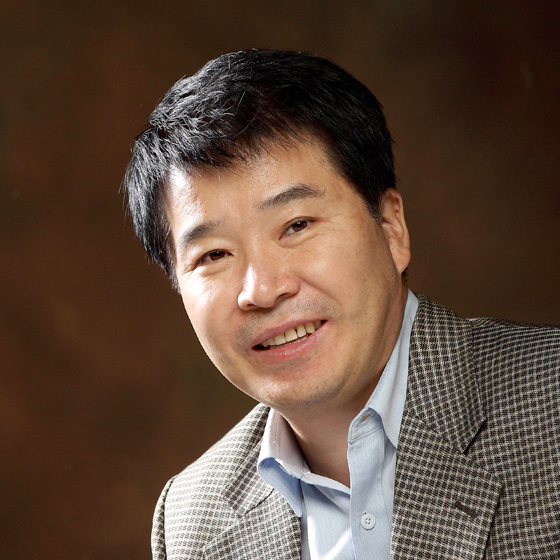
Dr. Eun-jung Lee
Plastic Surgery Specialist
Director | Clinical Professor, Yonsei University College of Medicine | Plastic Surgery Specialist, PhD in Medicine
Dr. Eun-jung Lee brings over 25 years of plastic surgery experience to the periorbital area, with clinical expertise spanning upper and lower eyelid surgery, dark circle correction, and under-eye rejuvenation. She completed both her Master's and PhD in Medicine at Yonsei University, holds a Master's in Law from Korea University, and serves as Clinical Professor at Yonsei University College of Medicine.
As former Academic Committee Chair of the Eye Surgery Research Group under the Korean Society of Plastic Surgeons and former Chairperson of the Seoul Medical Tourism Association, Dr. Lee brings institutional depth and research-level knowledge to lower eyelid surgery — a zone where accurate diagnosis of fat distribution and tear trough anatomy is essential to selecting the right approach. Every patient is seen, assessed, and treated directly by Dr. Lee, with no hand-offs at any stage of care.
She holds full membership in the Korean Society of Plastic and Reconstructive Surgeons, Lifetime Membership in the Korean Society for Aesthetic Plastic Surgery, and full membership in the International Society of Plastic Surgeons.
Treatment Areas and Expected Improvements
- Lower eyelid fat compartment: Prolapsed orbital fat is carefully repositioned rather than removed, reducing the visible bulge while preserving natural volume in the under-eye zone. The lower eyelid surface becomes smoother and less puffy in appearance.
- Tear trough area: Repositioned fat fills the hollow groove between the lower eyelid and cheek — addressing the shadow-producing depth that makes dark circles and tired appearance more pronounced. The transition from eyelid to cheek becomes more gradual and natural.
- Overall lower eyelid contour: The combined effect of reduced puffiness above and filled hollowing below is a lower eyelid that appears smoother, more rested, and more youthful — without the deflated appearance that can follow simple fat removal.
- Skin laxity (where applicable): Where lower eyelid skin looseness contributes to the appearance alongside fat displacement, combined approaches addressing both fat repositioning and skin tightening may be recommended based on individual assessment.
Results vary by individual anatomy, the volume and distribution of orbital fat, tear trough depth, skin characteristics, and healing response. No specific outcome is guaranteed, and realistic expectations are established during direct consultation with Dr. Lee.
The Under-Eye Fat Repositioning Process

1. Consultation and Structural Assessment: Dr. Lee evaluates the under-eye area hands-on — assessing fat compartment prominence, tear trough depth, skin laxity, and the overall lower eyelid anatomy. She determines whether fat repositioning alone, repositioning combined with conservative removal, or a combined approach with skin management is most appropriate, and explains the recommended plan fully.
2. Surgical Planning: Each plan is customized 1:1 to the patient's specific fat distribution and under-eye anatomy. Pre-operative preparation follows standard eye surgery protocol — fasting, medication adjustments, and complete medical history disclosure as required.
3. The Procedure: Under-eye fat repositioning is performed on a same-day basis under local or general sedation — no overnight hospitalization required. The surgical approach — transconjunctival (incision inside the lower eyelid, leaving no external scar) or subciliary (incision just below the lash line) — is selected based on individual assessment findings. Prolapsed fat is carefully mobilized and repositioned into the tear trough hollow, smoothing the lower eyelid contour from both above and below.
4. Immediate Aftercare: Post-operative swelling and bruising around the lower eyelid area are expected and resolve progressively. Cold compresses and specific aftercare instructions are provided to support healing and comfort during the initial recovery period.
5. Recovery: Patients should avoid rubbing the under-eye area, sun exposure, strenuous activity, and contact lens wear during the initial healing period. Makeup should be deferred until the treatment area has adequately healed. Temporary swelling, mild bruising, and sensitivity are normal and resolve over time — individual recovery timelines vary.
6. Follow-Up: All post-operative monitoring is conducted personally by Dr. Lee. The refined under-eye result — including the full smoothing of the contour and stabilization of repositioned fat — becomes visible as swelling resolves and healing progresses over the following weeks.
Results, Safety, and Longevity
Under-eye fat repositioning addresses the structural cause of the under-eye bag and tear trough hollow — redistributing existing fat rather than adding foreign material or simply removing tissue. Because the repositioned fat is autologous (the patient's own tissue) and is placed into the tear trough in a structurally supported position, the correction is intended to be long-lasting rather than requiring repeat treatments.
Simple fat removal, by contrast, can leave the under-eye area looking hollow or aged over time as surrounding tissues continue to change. Repositioning preserves natural volume where it is needed while eliminating the displaced bulge — a more anatomically appropriate correction for the combined puffiness-plus-hollow presentation.
Risks include temporary swelling, bruising, discomfort, and a small risk of infection. The transconjunctival approach, where applicable, leaves no external scar. Lower eyelid surgery requires precise technique to maintain eyelid position and contour — which is why individual assessment and surgical experience in this specific zone are important. Serious complications are rare. All risks, realistic expectations, and procedure-specific considerations are discussed transparently by Dr. Lee before any surgery is scheduled.
Why Choose Yonsei Natural Beauty Aesthetic Surgical Clinic for Under-Eye Fat Repositioning?

Yonsei Natural Beauty Aesthetic Surgical Clinic has operated on a one-doctor model since 1994 — Dr. Eun-jung Lee personally assesses your lower eyelid anatomy, performs the fat repositioning, and monitors every stage of your recovery. For under-eye surgery, where the correct approach depends on accurately diagnosing the balance between fat prolapse and tear trough hollowing in each individual case, this level of direct surgical accountability matters.
With over 25 years of eye surgery experience, an academic appointment as Clinical Professor at Yonsei University College of Medicine, and former leadership of the Eye Surgery Research Group under the Korean Society of Plastic Surgeons, Dr. Lee brings both the clinical depth and the aesthetic judgment that lower eyelid fat repositioning requires.
- 30+ years of continuous single-surgeon practice in Seodaemun-gu, Seoul
- Repositioning over removal — fat preserved and redistributed for a natural, volume-appropriate result rather than a hollowed post-surgical appearance
- Lifetime member, Korean Society for Aesthetic Plastic Surgery; full member, International Society of Plastic Surgeons
- Expanding multilingual support for international patients traveling from the United States and beyond
Patient Experiences
Under-Eye Fat Repositioning Patient, 30s
This patient had noticeable under-eye bags that had been present since her late 20s — a hereditary fat distribution rather than an age-related change. After consultation with Dr. Lee confirming fat prolapse with mild tear trough hollowing, a fat repositioning procedure was performed on a same-day basis. At follow-up, she described the under-eye area as significantly smoother — the bulge reduced and the hollow filled — without looking deflated or surgically altered.
Combined Fat Repositioning Patient, 40s
A patient in her early 40s presented with a pronounced combination of lower eyelid puffiness and a deep tear trough shadow that made her look consistently tired. Dr. Lee recommended fat repositioning to address both simultaneously. Following recovery, the patient noted that the under-eye area appeared noticeably more rested and youthful — with a natural contour that didn't draw attention to itself.
Ready to Address the Structural Cause of Your Under-Eye Bags?
If under-eye puffiness, tear trough hollowing, or a persistent tired appearance is affecting how you look and feel — and you want a surgical solution that addresses the underlying anatomy rather than masking the surface — under-eye fat repositioning at Yonsei Natural Beauty Aesthetic Surgical Clinic offers a structurally sound correction managed personally by one specialist from start to finish.
Dr. Eun-jung Lee will assess your lower eyelid anatomy directly, determine whether fat repositioning is the most appropriate approach for your specific presentation, and give you a clear, honest picture of what the procedure can realistically achieve.
[Book Your Under-Eye Fat Repositioning Consultation with Dr. Lee]
Contact the clinic directly to schedule your appointment or request information about international patient coordination — multilingual support available for patients traveling to Seoul from abroad.
Other Services
Explore additional procedures tailored to natural facial balance.

Neck Wrinkle Correction
Surgical neck wrinkle correction addresses these structural changes directly.
Learn More

Preauricular Facelift Surgery
Preauricular facelift surgery addresses facial aging at the structural level. The incision is placed within the preauricular zone — in front of and around the ear — where it heals in a naturally concealed location.
Learn More
Under-Eye Fat Repositioning
Under-eye fat repositioning is a surgical procedure that addresses this structural cause directly.
Learn More