Trusted Since 1994 in Sinchon, Seoul · 1:1 Personalized Eye Surgery, Facial Lifting & Anti-Aging by One Board-Certified Specialist
5.0 Verified Patient Satisfaction
en-US


Eye Plastic Surgery
Double Eyelid Surgery (Non-Incisional/Incisional)
Double eyelid surgery is one of the most frequently performed procedures in aesthetic plastic surgery — and one of the most technically demanding.
Schedule a ConsultationWhat Is Double Eyelid Surgery?
Double eyelid surgery is one of the most frequently performed procedures in aesthetic plastic surgery — and one of the most technically demanding. The eyes are among the most defining features of a person's overall impression, built from fine, complex structures where even millimeter-level decisions affect how natural the result looks and how long it lasts. Despite its reputation as a straightforward procedure, double eyelid surgery requires careful assessment, precise technique, and a surgeon with the depth of experience to design a fold that suits each individual's unique facial anatomy.
At Yonsei Natural Beauty Aesthetic Surgical Clinic, double eyelid surgery is offered in two forms — non-incision and incision — with the method selected based on a thorough hands-on assessment of eyelid thickness, fold severity, skin condition, and the patient's desired outcome. Every consultation, procedure, and follow-up is handled personally by Dr. Eun-jung Lee, with no delegation at any stage.
Non-Incision vs. Incision Double Eyelid Surgery — What Is the Difference?
Non-Incision Double Eyelid Surgery
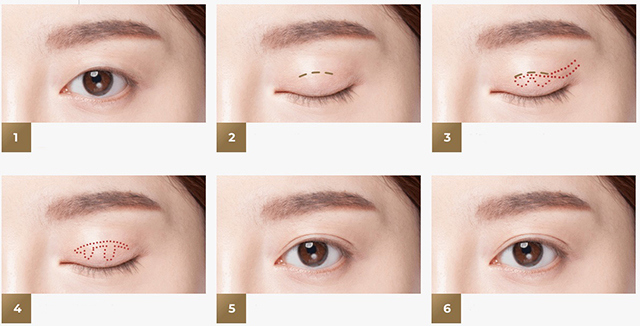
The non-incision method creates a double eyelid fold without any skin incision. Four tiny needle holes are made in the eyelid; a suture is threaded through using a continuous single-knot technique to create adhesion and form the fold. Because no skin is cut, there is generally no visible scarring and recovery is significantly faster than the incision method. The result looks like a fold that was naturally always there — defined yet undetectable as surgical.
Patients wanting a natural-looking fold; eyelid skin that is not severely thick or drooping; patients wanting minimal scarring and faster recovery; those who find the incision method uncomfortable.
Incision Double Eyelid Surgery
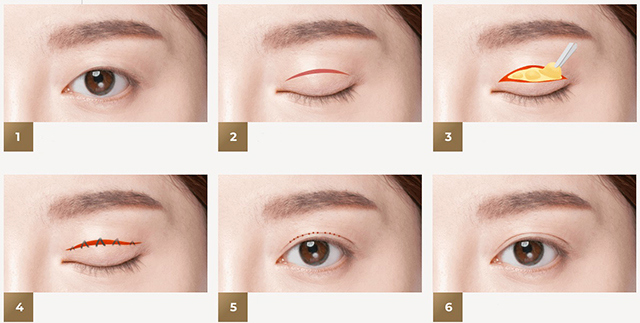
The incision method involves a skin incision along a precisely designed fold line, followed by removal of excess fat, muscle, and skin tissue, and reinforcement of the fold. This approach allows more precise correction and can achieve a higher, more defined fold — particularly effective for thick eyelids, significant drooping, or cases where non-incision correction would be insufficient.
Thick eyelids causing a stuffy or heavy appearance; significant eyelid drooping; patients wanting a clearly defined, crease-resistant fold; cases where prior non-incision surgery produced unsatisfactory results.
Which Fold Type Is Right for You?

Double eyelid folds differ not just in height but in their starting point — whether the line begins at the inner corner of the eye or outside it. Choosing the fold type that suits your facial structure and personal preference is as important as choosing the surgical method.
- In-Fold: The most natural and commonly preferred fold type for Korean facial anatomy. The fold line is not visible at the inner corner, and the line widens gradually from the center outward. Best suited for patients without a severe Mongolian fold who want a subtle, natural-looking result that integrates seamlessly with their existing eye shape.
- Out-Fold: A more defined, Westernized-looking fold where the line is visible from the inner corner and runs parallel across the eye like a rainbow arc. Generally better achieved with the suture method. Requires extra consideration for patients with thick skin or smaller eyes — the parallel line can appear more prominent in these cases.
- In-Out Fold: A hybrid design: narrow at the inner corner (like an in-fold) and widening toward the outer corner (like an out-fold). Suitable for patients with longer eyes and a less prominent forehead. May show a slight visible line at the inner corner — careful design decisions are required during consultation.
The right fold type depends on your specific eye shape, Mongolian fold presence, skin thickness, and overall facial proportions. Dr. Lee assesses all of these factors directly during consultation before any fold design is proposed.
Who Is a Candidate for Double Eyelid Surgery?
Double eyelid surgery suits a wide range of patients — from those who have never had a fold to those seeking improvement after a prior procedure.
- Adults in their teens through 50s with a monolid or single eyelid who want a defined, natural fold
- Patients with mild-to-moderate eyelid thickness or a non-severe Mongolian fold who prefer a minimally invasive non-incision approach
- Individuals with thick, heavy, or drooping upper eyelids requiring tissue removal for a clean, defined result — suited to the incision method
- Those who had prior double eyelid surgery that produced unclear, asymmetric, or insufficient results
- Patients who want an in-fold, out-fold, or in-out fold design tailored specifically to their facial structure
- People who want a fold that looks naturally their own — not obviously surgical
- International patients seeking a single-surgeon model where one physician designs, performs, and monitors every stage of the procedure
Meet the Specialist: Dr. Eun-jung Lee
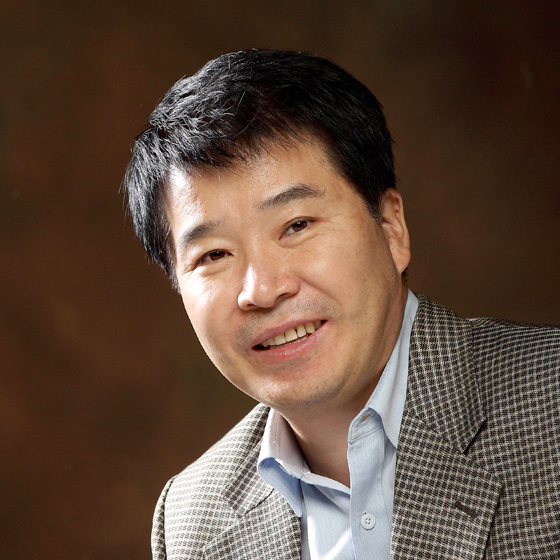
Dr. Eun-jung Lee
Plastic Surgery Specialist
Director | Clinical Professor, Yonsei University College of Medicine | Plastic Surgery Specialist, PhD in Medicine
Dr. Eun-jung Lee has practiced plastic surgery for over 25 years, with deep clinical expertise in eye surgery and periorbital aesthetics. She completed both her Master's and PhD in Medicine at Yonsei University and holds a Master's in Law from Korea University, maintaining an active appointment as Clinical Professor at Yonsei University College of Medicine. As former Academic Committee Chair of the Eye Surgery Research Group under the Korean Society of Plastic Surgeons and former Chairperson of the Seoul Medical Tourism Association, Dr. Lee brings institutional depth to a field where experience and design sensibility are equally important.
Her approach to double eyelid surgery is built on three principles: selecting the most appropriate method based on each patient's actual eyelid anatomy; choosing a fold design that suits the individual's facial image rather than a generic template; and performing every stage of the process — consultation, surgery, and follow-up — personally, without delegation.
Dr. Lee holds full membership in the Korean Society of Plastic and Reconstructive Surgeons, Lifetime Membership in the Korean Society for Aesthetic Plastic Surgery, and full membership in the International Society of Plastic Surgeons.
Treatment Areas and Expected Improvements
- Upper eyelid fold: Creation of a defined, natural crease — in-fold, out-fold, or in-out fold — proportional to the individual's eye shape and facial structure
- Eyelid heaviness (incision cases): Removal of excess fat, skin, and muscle tissue that causes a stuffy, drooping, or congested upper eyelid appearance
- Inner corner area (fold design): Fold starting point selected to complement Mongolian fold status and overall facial balance
- Overall eye appearance: Eyes that appear more open, defined, and refreshed — with a fold that looks naturally integrated rather than surgically imposed
Expected improvements vary by individual anatomy, eyelid condition, and the method used. Non-incision results are natural and subtle with minimal downtime; incision results are more defined and suited to cases requiring structural correction. No specific outcome is guaranteed, and realistic expectations are established during consultation with Dr. Lee.
The Double Eyelid Surgery Process
1. Consultation and Fold Design: Dr. Lee assesses eyelid thickness, fold characteristics, Mongolian fold presence, skin condition, and facial proportions hands-on. She discusses the non-incision and incision options, recommends the most appropriate method, and designs the fold type and height to suit the individual patient.
2. Surgical Planning: Each plan is fully customized 1:1. Pre-operative preparation follows standard eye surgery protocol including fasting, medication adjustments, and disclosure of all relevant medical history.
3. The Procedure: Non-incision surgery takes approximately 30–40 minutes under general sedation or local anesthesia. Four tiny needle holes are created; sutures are threaded through using a continuous single-knot method to form the fold — no stitching required post-procedure. Incision surgery involves a precisely designed skin line, tissue removal, and fold reinforcement. Both methods are performed on a same-day basis with no overnight stay required.
4. Immediate Aftercare: Non-incision patients experience minimal swelling and can typically return to daily activities quickly. Incision patients experience moderate swelling that reduces progressively. Stitch removal is scheduled 2–3 days after surgery for non-incision cases.
5. Recovery: Recovery varies by individual and method. Non-incision patients generally recover faster with minimal visible signs. Incision patients should allow additional time for swelling to resolve before the full fold result becomes visible. Post-operative clinic visits are required 1–2 times.
6. Follow-Up: All post-operative monitoring is conducted personally by Dr. Lee. The fold result stabilizes and looks its most natural as healing progresses — typically within several weeks for non-incision and longer for incision cases depending on individual healing.
Results, Safety, and Longevity

The non-incision 4-point suture method used at Yonsei Natural Beauty Aesthetic Surgical Clinic is designed to create a fold that looks naturally permanent — completing adhesion without skin cutting and leaving no visible marks under normal conditions. The fold is intended to be crease-resistant and stable over time, though individual healing and eyelid changes with age can affect long-term appearance.
The incision method, by removing tissue and reinforcing the fold structurally, produces a more durable result — particularly in cases involving thick eyelids or significant drooping where suture-only techniques would be insufficient.
Risks for both methods include temporary swelling, bruising, and discomfort. The non-incision method carries minimal scarring risk; the incision method involves a healing period for the incision line. Serious complications are rare. All risks, realistic outcomes, and method-specific considerations are discussed transparently by Dr. Lee during the pre-operative consultation — no decisions are rushed.
Why Choose Yonsei Natural Beauty Aesthetic Surgical Clinic for Double Eyelid Surgery?

Since 1994, Yonsei Natural Beauty Aesthetic Surgical Clinic has operated on a one-doctor model — meaning Dr. Eun-jung Lee personally handles every consultation, every procedure, and every follow-up visit. For double eyelid surgery, where fold design decisions require both technical precision and a genuine aesthetic sensibility for what suits each individual face, this continuity matters.
Dr. Lee's 25+ years of eye surgery experience, combined with her academic role as Clinical Professor at Yonsei University College of Medicine and her former leadership of the Eye Surgery Research Group under the Korean Society of Plastic Surgeons, give her a depth of both clinical and research-level expertise in periorbital procedures. Her design approach is individualized — fold type, height, and method are chosen to suit the patient's own image, not applied from a standard template.
The clinic's intentionally limited daily patient volume allows longer consultation times, more precise surgical planning, and closer post-operative monitoring. Same-day surgery and fast non-incision recovery keep the process straightforward.
- 30+ years of continuous single-surgeon practice in Seodaemun-gu, Seoul
- 1:1 customized fold design — in-fold, out-fold, or in-out fold selected to match individual facial anatomy
- 4-point continuous suture technique — no visible scarring, no stitching required, natural-looking permanent fold
- Expanding multilingual support for international patients from the United States and beyond
Patient Experiences
Non-Incision Double Eyelid Patient, 20s
This patient had a monolid and wanted a subtle, natural-looking in-fold that wouldn't look obviously surgical. After consultation with Dr. Lee, a non-incision procedure using the 4-point suture method was performed in under 40 minutes. Stitch removal was at 2 days. She described the result as looking like a fold she had always had — visible enough to define her eyes, natural enough that others couldn't identify it as surgical.
Incision Double Eyelid Patient, 30s
A patient in her early 30s had thick upper eyelids that had made a prior non-incision attempt insufficient — the fold hadn't held clearly. Dr. Lee assessed the eyelid thickness and recommended the incision method for complete correction. Following recovery, the patient noted a clearly defined fold with a more open, refreshed eye appearance — and no recurrence of the heaviness that had made her prior result unclear.
Ready for Eyes That Look Naturally, Beautifully Yours?
Whether you are considering double eyelid surgery for the first time or looking to correct a previous result, Yonsei Natural Beauty Aesthetic Surgical Clinic offers the surgical expertise, fold design sensibility, and personal continuity of care to help you make a confident, informed decision.
Dr. Eun-jung Lee will personally assess your eyelid anatomy, recommend the most appropriate method and fold design, and guide you through every stage — from first consultation to final follow-up.
[Book Your Double Eyelid Surgery Consultation with Dr. Lee]
Contact the clinic directly to schedule your appointment or ask about international patient coordination services — multilingual support available for patients traveling to Seoul from abroad.
Other Services
Explore additional procedures tailored to natural facial balance.

Neck Wrinkle Correction
Surgical neck wrinkle correction addresses these structural changes directly.
Learn More

Preauricular Facelift Surgery
Preauricular facelift surgery addresses facial aging at the structural level. The incision is placed within the preauricular zone — in front of and around the ear — where it heals in a naturally concealed location.
Learn More

Under-Eye Fat Repositioning
Under-eye fat repositioning is a surgical procedure that addresses this structural cause directly.
Learn More