Trusted Since 1994 in Sinchon, Seoul · 1:1 Personalized Eye Surgery, Facial Lifting & Anti-Aging by One Board-Certified Specialist
5.0 Verified Patient Satisfaction
en-US


Facial Lifting
Preauricular Facelift Surgery
Preauricular facelift surgery addresses facial aging at the structural level. The incision is placed within the preauricular zone — in front of and around the ear — where it heals in a naturally concealed location.
Schedule a ConsultationWhat Is Preauricular Facelift Surgery?
As facial aging progresses, the soft tissue structures of the face — the skin, fat compartments, and the SMAS (superficial musculoaponeurotic system) — lose elasticity and descend from their original positions. The midface flattens, the nasolabial folds deepen, jowls form along the jawline, and the neck loses its clean transition from face to chin. For patients with moderate-to-significant facial descent, non-surgical and minimally invasive treatments such as thread lifting reach their limits — the degree of structural change requires surgical repositioning to achieve a meaningful, lasting result.
Preauricular facelift surgery addresses facial aging at the structural level. The incision is placed within the preauricular zone — in front of and around the ear — where it heals in a naturally concealed location. Through this access, the SMAS layer beneath the skin is lifted and repositioned, restoring the underlying facial architecture to a more youthful position. The overlying skin is then re-draped without tension over the repositioned deep tissue — producing a natural result rather than the pulled or tightened appearance associated with skin-only lifting techniques.
At Yonsei Natural Beauty Aesthetic Surgical Clinic, every facelift procedure is assessed, planned, and performed personally by Dr. Eun-jung Lee, with no delegation at any stage of care.
Who Is a Candidate for Preauricular Facelift Surgery?
- Adults in their 40s–70s with moderate-to-significant facial soft tissue descent — jowling, deep nasolabial folds, loss of jawline definition, and lower face sagging that thread lifting or other minimally invasive approaches cannot adequately address
- Patients with established jowls — descended lower face tissue that has settled below the jawline, disrupting the clean jaw contour
- Individuals with deep nasolabial folds caused primarily by midface descent rather than volume loss alone
- Those with a loss of lower face and jawline definition — the square, clean jaw contour of youth replaced by a softer, less defined lower face profile
- Patients who have reached the limits of non-surgical or minimally invasive treatment — thread lifting, energy devices, or injectables that have provided insufficient improvement for the degree of descent present
- Individuals seeking a comprehensive, durable lower face and jawline restoration in a single surgical procedure
- Those who want a natural-looking result — facial rejuvenation that restores a younger version of their own face rather than an altered or operated appearance
- International patients seeking a single-surgeon continuity model for a significant procedure from detailed assessment through full recovery
Meet the Specialist: Dr. Eun-jung Lee
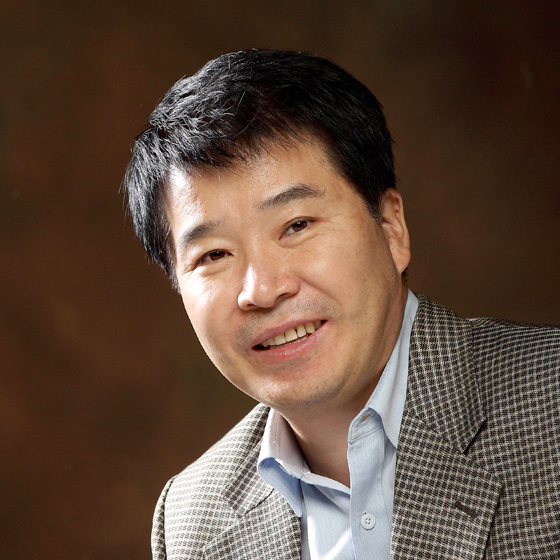
Dr. Eun-jung Lee
Plastic Surgery Specialist
Director | Clinical Professor, Yonsei University College of Medicine | Plastic Surgery Specialist, PhD in Medicine
Dr. Eun-jung Lee brings over 25 years of plastic surgery experience to facial lifting — with a clinical philosophy centered on restoring natural facial architecture rather than simply tightening surface skin. She completed both her Master's and PhD in Medicine at Yonsei University, holds a Master's in Law from Korea University, and serves as Clinical Professor at Yonsei University College of Medicine.
As former Academic Committee Chair of the Eye Surgery Research Group under the Korean Society of Plastic Surgeons and former Chairperson of the Seoul Medical Tourism Association, Dr. Lee brings institutional depth and research-level knowledge to facial lifting surgery — a procedure where the quality of SMAS management, the approach to skin re-draping, and the individualized assessment of each patient's facial aging pattern directly determine how natural and how durable the result will be. Every patient is assessed and treated directly by Dr. Lee, with no hand-offs at any stage.
She holds full membership in the Korean Society of Plastic and Reconstructive Surgeons, Lifetime Membership in the Korean Society for Aesthetic Plastic Surgery, and full membership in the International Society of Plastic Surgeons.
Treatment Areas and Expected Improvements
- SMAS layer and deep facial tissue: Repositioning the SMAS — the fibromuscular layer beneath the facial skin — restores the underlying facial architecture to a more youthful position. Because the deep tissue is lifted rather than the skin alone, the result avoids the unnaturally tightened appearance of older skin-only techniques and is structurally more stable.
- Jowls and jawline: Descended lower face tissue that has settled below the jawline is lifted and repositioned — restoring a cleaner, more defined jaw contour and reducing the soft, undefined lower face profile that jowling creates.
- Nasolabial folds: As the midface and lower face soft tissue is repositioned upward, the folds running from the nose to the corners of the mouth are softened from above — reducing their depth without filling them directly.
- Lower face contour: The overall lower face shape is restored toward the more defined, lifted contour of a younger face — with the jawline, cheek-to-jaw transition, and lower face silhouette all improved through comprehensive soft tissue repositioning.
- Neck (where combined): Where neck laxity accompanies lower face aging, a combined lower face and neck lift addresses both zones in a single procedure — restoring the face-to-neck transition and improving neck contour simultaneously.
- Skin quality and appearance: With deep tissue repositioned rather than skin over-tightened, the skin re-drapes naturally over the new underlying contour — appearing smoother and more rested without the stretched or pulled look that results from tension-based lifting.
Results vary by individual anatomy, the degree and pattern of facial descent, skin quality, and healing response. No specific outcome is guaranteed, and realistic expectations are established through direct consultation with Dr. Lee.
The Preauricular Facelift Process
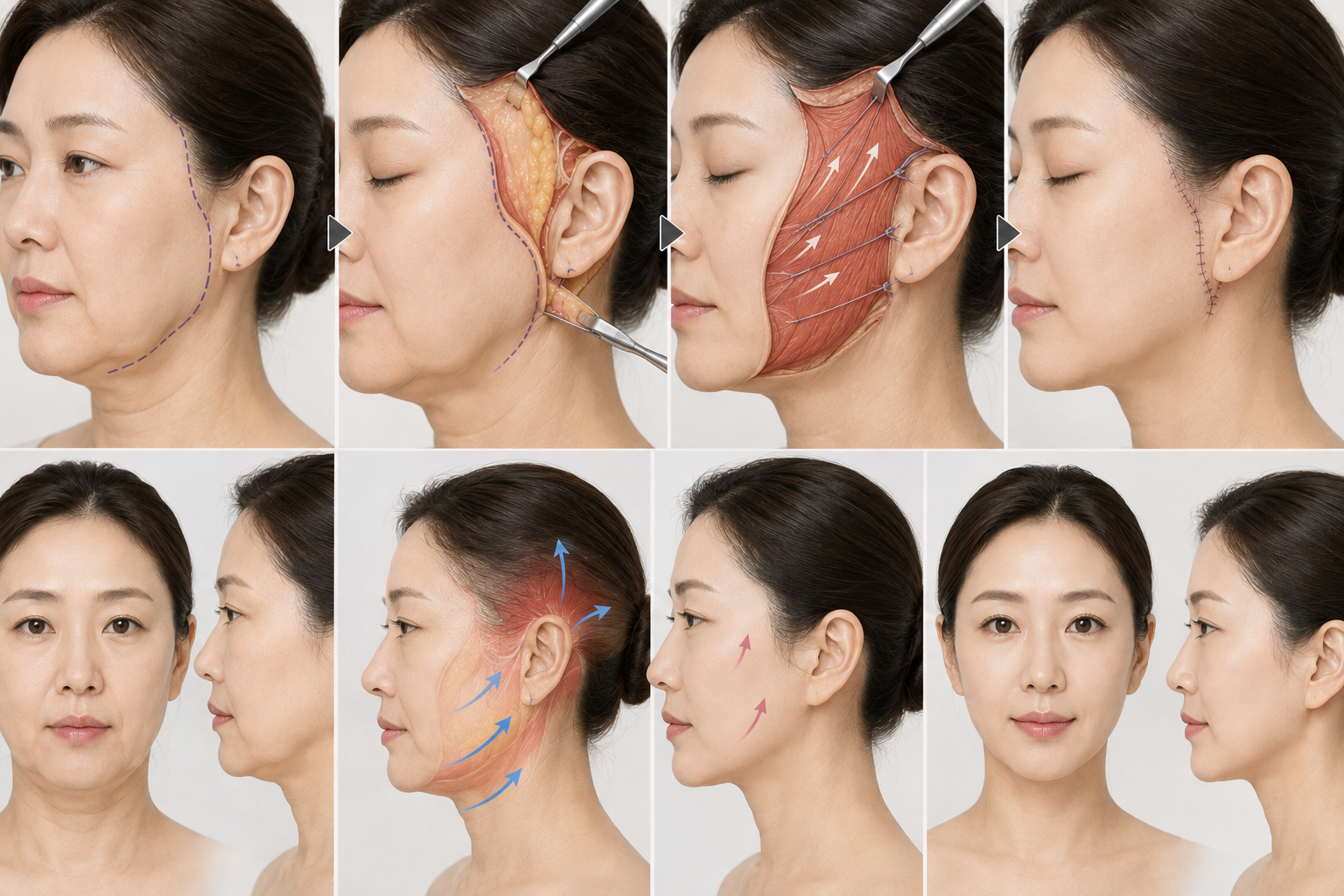
1. Consultation and Comprehensive Facial Assessment: Dr. Lee conducts a detailed hands-on evaluation of facial soft tissue descent — assessing SMAS condition, skin laxity, jowl prominence, nasolabial fold depth, jawline definition, neck status, and overall facial aging pattern. She determines the most appropriate facelift approach, whether neck lifting or other combined procedures are indicated, and provides a realistic, honest assessment of what the procedure can achieve before any decision is made.
2. Surgical Planning: Each facelift plan is fully customized 1:1 to the patient's specific facial aging pattern and anatomy. The extent of SMAS lifting, skin re-draping, and any combined procedures are planned as an integrated approach. Incision design within the preauricular zone is planned to heal in the most concealed location possible. Pre-operative preparation follows comprehensive surgical protocol including medical evaluation, fasting, medication adjustments, and complete medical history disclosure.
3. The Procedure: Preauricular facelift surgery is performed under general anesthesia or local anesthesia with sedation. The procedure involves careful elevation of the facial skin through the preauricular incision, repositioning of the SMAS layer to restore deep facial architecture, and precise re-draping of the skin without tension over the repositioned tissue. Where neck lifting is combined, this is addressed during the same surgical session. The procedure is more extensive than minimally invasive lifting — surgical time reflects the scope of the correction being performed.
4. Immediate Aftercare: Post-operative swelling, bruising, and tightness in the lower face and preauricular zone are expected and resolve progressively over the initial weeks of recovery. Dressings and drainage management instructions are provided as appropriate. Specific aftercare guidance covers wound care, sleeping position, activity restrictions, and what to expect during the early healing period.
5. Recovery: Facelift recovery is more substantial than minimally invasive procedures. Patients should plan for a meaningful recovery period — avoiding strenuous activity, sun exposure, and activities that strain the face during healing. Swelling resolves progressively; the refined result becomes clearer over the weeks and months following surgery as the tissues settle into their new position. Individual recovery timelines vary.
6. Follow-Up: All post-operative monitoring is conducted personally by Dr. Lee. Facelift follow-up visits are particularly important for monitoring healing across multiple tissue layers, assessing symmetry, and evaluating the progressively developing result. The full outcome becomes visible over several months as all swelling resolves completely.
Results, Safety, and Longevity
Preauricular facelift surgery with SMAS repositioning addresses facial aging at the structural level — lifting and repositioning the tissue that has descended rather than compensating at the surface. Because the deep facial architecture is restored rather than the skin simply tightened, the result is more natural in appearance and more durable than surface-only approaches.
The longevity of facelift results varies by individual — influenced by skin quality, lifestyle factors, sun exposure habits, and the natural rate of continued aging. Facelift surgery does not stop aging, but it addresses the accumulated descent that has occurred — returning the face to an earlier structural baseline and providing a meaningful period of improved appearance before further aging becomes visible.
Risks include temporary swelling, bruising, numbness, tightness, and a small risk of infection or healing complications. Nerve injury is possible but rare with appropriate technique. Incision healing within the preauricular zone progresses over months and typically becomes minimally visible in normal daily life. All risks, realistic recovery expectations, and outcome parameters specific to the individual patient's anatomy are discussed transparently by Dr. Lee during the pre-operative consultation.
Why Choose Yonsei Natural Beauty Aesthetic Surgical Clinic for Preauricular Facelift Surgery?

Yonsei Natural Beauty Aesthetic Surgical Clinic has operated on a one-doctor model since 1994 — Dr. Eun-jung Lee personally assesses your facial aging pattern, designs the surgical plan, performs the facelift, and monitors your recovery through every follow-up visit. For a procedure of this scope, having one surgeon accountable for every decision — from the pre-operative assessment to the final follow-up — is not a preference but a clinical standard that directly affects both safety and outcome quality.
Dr. Lee's 25+ years of facial lifting experience, combined with her academic appointment as Clinical Professor at Yonsei University College of Medicine and former leadership of the Eye Surgery Research Group under the Korean Society of Plastic Surgeons, give her the procedural depth and the aesthetic judgment that comprehensive facelift surgery requires. Her approach prioritizes a natural result — a restored version of the patient's own face at a younger age — over an overtly lifted or altered appearance.
- 30+ years of continuous single-surgeon practice in Seodaemun-gu, Seoul
- SMAS-level lifting — deep tissue repositioning for a natural, structurally durable result rather than surface-only skin tightening
- Lifetime member, Korean Society for Aesthetic Plastic Surgery; full member, International Society of Plastic Surgeons
- Expanding multilingual support for international patients traveling from the United States and beyond
Patient Experiences
Preauricular Facelift Patient, 50s
This patient had significant jowling and a softened jawline that had developed progressively through her late 40s — a degree of descent that thread lifting had not been able to adequately address. After a comprehensive assessment by Dr. Lee confirming surgical facelift as the appropriate approach, a preauricular SMAS facelift was performed. Following a recovery period, the patient described the lower face as looking substantially more defined and youthful — with a natural result that she felt looked like herself at an earlier age rather than someone who had had surgery.
Combined Facelift and Neck Lift Patient, 60s
A patient in his early 60s presented with both significant lower face descent and early neck laxity — a common combination in this age range that both required surgical correction for a complete result. Dr. Lee recommended a combined lower face and neck lift in a single procedure. Following recovery, the patient noted a comprehensive improvement in facial contour and the face-to-neck transition — looking refreshed and natural rather than operated.
Ready to Restore the Facial Contour You Remember?
If significant facial sagging — jowling, a softened jawline, deep nasolabial folds, or lower face descent — is affecting how you look and feel, and minimally invasive approaches have reached their limits, preauricular facelift surgery at Yonsei Natural Beauty Aesthetic Surgical Clinic offers a comprehensive, structurally sound correction managed personally by one specialist from first assessment to final follow-up.
Dr. Eun-jung Lee will assess your facial aging pattern directly, recommend the most appropriate surgical approach, and give you a clear, honest picture of what facelift surgery can realistically achieve for your face.
[Book Your Facelift Consultation with Dr. Lee]
Contact the clinic directly to schedule your appointment or request information about international patient coordination — multilingual support available for patients traveling to Seoul from abroad.
Other Services
Explore additional procedures tailored to natural facial balance.

Neck Wrinkle Correction
Surgical neck wrinkle correction addresses these structural changes directly.
Learn More
Preauricular Facelift Surgery
Preauricular facelift surgery addresses facial aging at the structural level. The incision is placed within the preauricular zone — in front of and around the ear — where it heals in a naturally concealed location.
Learn More
Under-Eye Fat Repositioning
Under-eye fat repositioning is a surgical procedure that addresses this structural cause directly.
Learn More