Trusted Since 1994 in Sinchon, Seoul · 1:1 Personalized Eye Surgery, Facial Lifting & Anti-Aging by One Board-Certified Specialist
5.0 Verified Patient Satisfaction
en-US


Eye Plastic Surgery
Double Eyelid Revision Surgery
Double eyelid revision surgery addresses the results of a previous double eyelid procedure that did not meet the patient's expectations.
Schedule a ConsultationWhat Is Double Eyelid Revision Surgery?
Double eyelid revision surgery addresses the results of a previous double eyelid procedure that did not meet the patient's expectations — whether due to fold height that is too high or too low, asymmetry between the two eyes, a crease that looks unnatural or artificial, a fold that has partially or fully loosened over time, or visible scarring from the original operation.
Revision surgery is technically more complex than primary double eyelid surgery. The presence of scar tissue from a prior procedure changes the eyelid's internal structure, and the revision surgeon must work within these altered conditions to achieve a natural, corrected result. This requires not only surgical skill but a thorough understanding of eyelid anatomy and the specific changes that prior surgery has introduced. At Yonsei Natural Beauty Aesthetic Surgical Clinic, every revision case is assessed, planned, and performed personally by Dr. Eun-jung Lee — a specialist with over 25 years of eye surgery experience and a practice built on the continuity of single-surgeon care.
Who Is a Candidate for Double Eyelid Revision Surgery?
- Adults of any age whose prior double eyelid surgery produced an unsatisfactory result — fold too high, too low, too wide, or too narrow
- Patients with asymmetric eyelid folds — a visible difference in height, shape, or definition between the two eyes following a previous procedure
- Individuals whose fold has loosened, faded, or disappeared after a prior non-incision (suture) procedure
- Those with an unnatural or artificial-looking crease — a fold that looks operated rather than naturally integrated with the eyelid
- Patients with visible scarring from a prior incision procedure that affects the appearance of the eyelid
- Those who had double eyelid surgery but eyes still appear stuffy or heavy — where the fold was created but the underlying eyelid condition was not fully addressed
- Patients who had surgery elsewhere and are seeking a specialist with independent assessment and revision expertise
- International patients seeking a single-surgeon model for a complex revision case — one physician from assessment through recovery
Meet the Specialist: Dr. Eun-jung Lee
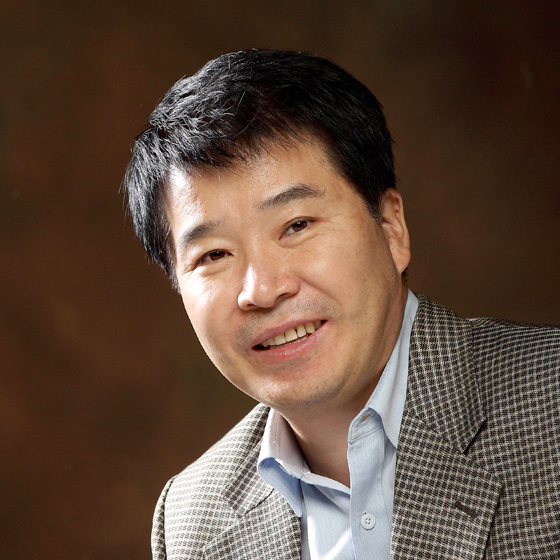
Dr. Eun-jung Lee
Plastic Surgery Specialist
Director | Clinical Professor, Yonsei University College of Medicine | Plastic Surgery Specialist, PhD in Medicine
Dr. Eun-jung Lee brings over 25 years of plastic surgery experience to eyelid surgery — including both primary procedures and complex revision cases. She completed both her Master's and PhD in Medicine at Yonsei University, holds a Master's in Law from Korea University, and serves as Clinical Professor at Yonsei University College of Medicine. As former Academic Committee Chair of the Eye Surgery Research Group under the Korean Society of Plastic Surgeons and former Chairperson of the Seoul Medical Tourism Association, she brings institutional depth and research-level knowledge to a field where revision cases demand the highest level of surgical judgment.
Revision surgery requires an independent, honest assessment of what the prior procedure achieved and what can realistically be corrected — a conversation that Dr. Lee conducts personally with every patient. There are no consulting intermediaries, no delegated assessments. Every stage of the revision process — evaluation, surgical planning, the procedure itself, and all post-operative monitoring — is managed directly by Dr. Lee.
She holds full membership in the Korean Society of Plastic and Reconstructive Surgeons, Lifetime Membership in the Korean Society for Aesthetic Plastic Surgery, and full membership in the International Society of Plastic Surgeons.
Common Revision Concerns and What Can Be Addressed
- Fold height correction: A crease that sits too high creates an artificial, wide-eyed appearance; one that sits too low may not be clearly visible. Revision surgery redesigns the fold line at a height proportional to the individual's eyelid anatomy and facial features.
- Asymmetry correction: Where the two eyelids show a visible difference in fold height, shape, or definition following prior surgery, revision targets the specific eyelid or eyelids requiring adjustment to restore balance.
- Loosened or disappeared fold: A fold that has relaxed after a suture-based non-incision procedure can often be re-established — with the method chosen based on the current eyelid condition and what is most likely to produce a stable result.
- Unnatural crease appearance: An overly deep, harsh, or artificial-looking fold can be softened and redesigned to integrate more naturally with the eyelid structure.
- Scar revision: Visible scarring from a prior incision procedure is assessed for its location, depth, and the surrounding tissue condition — with revision planning aimed at minimizing its appearance while addressing the fold simultaneously.
- Persistent stuffiness or heaviness: Where prior surgery created a fold but left the eyelid feeling or appearing heavy, combined revision with tissue management or ptosis correction may be recommended based on assessment findings.
Results vary significantly by individual case, the extent of changes from the prior procedure, scar tissue characteristics, and healing response. A thorough consultation with Dr. Lee is essential to establish what is realistically achievable for each specific revision situation.
The Double Eyelid Revision Process

1. Consultation and Independent Assessment: Dr. Lee conducts a hands-on evaluation of the prior surgical result — assessing fold height, symmetry, scar tissue, eyelid skin condition, and any functional concerns. She provides an honest, independent assessment of what the revision can address and what approach is most appropriate, with no obligation to proceed.
2. Revision Planning: Each revision plan is fully customized to the individual's existing eyelid condition and goals. The appropriate method — non-incision re-suturing, incision revision, or a combined approach — is selected based on the specific findings from assessment. Pre-operative preparation follows standard eye surgery protocol.
3. The Procedure: Revision surgery is performed on a same-day basis under local or general sedation — no overnight stay required. The complexity of the procedure varies by case; Dr. Lee will provide a clear explanation of what the surgery involves before any procedure is scheduled.
4. Immediate Aftercare: Post-operative swelling and bruising are expected, typically more pronounced than in primary surgery due to the presence of scar tissue and the extent of revision required. Specific aftercare instructions are provided to support healing.
5. Recovery: Recovery timelines for revision surgery are generally longer than for primary procedures. Patients should follow all post-operative instructions carefully, avoid rubbing the eyelid area, and defer makeup and face washing until advised. Swelling resolves progressively; the full fold result becomes clearer as healing stabilizes.
6. Follow-Up: All post-operative monitoring is conducted personally by Dr. Lee. Given the complexity of revision cases, follow-up visits are particularly important for monitoring healing progress and assessing the developing result.
Results, Safety, and Longevity
Revision surgery outcomes depend heavily on the condition of the eyelid following the prior procedure — including the amount and location of scar tissue, remaining skin and muscle availability, and the specific changes that need to be corrected. In many cases, meaningful improvement is achievable; in some complex cases, the goal may be improvement rather than complete correction to an ideal state.
Risks for revision surgery include the same considerations as primary eyelid surgery — swelling, bruising, discomfort, infection risk — as well as the additional complexity introduced by scar tissue and altered anatomy. The healing process after revision may be slower and less predictable than after a primary procedure. All of this is discussed transparently by Dr. Lee during the pre-operative consultation, where realistic expectations are established before any decision to proceed is made.
Why Choose Yonsei Natural Beauty Aesthetic Surgical Clinic for Double Eyelid Revision?
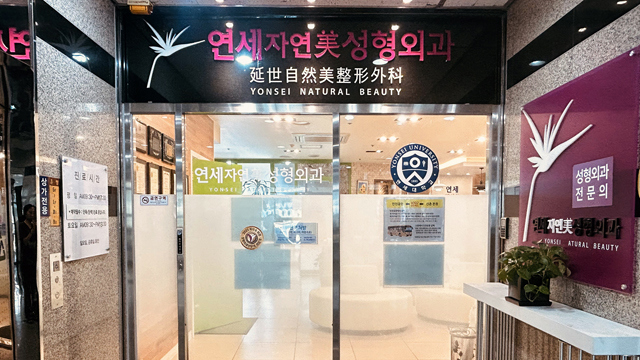
Revision surgery demands a surgeon who will assess your existing result honestly, explain what can and cannot be improved, and take personal responsibility for every stage of the correction. Since 1994, Yonsei Natural Beauty Aesthetic Surgical Clinic has operated on a one-doctor model — meaning Dr. Eun-jung Lee is the physician who evaluates your prior surgery, designs the revision plan, performs the procedure, and monitors your recovery directly.
For patients who have had an unsatisfactory result elsewhere, the one-doctor model matters especially: there is one point of accountability, one source of clinical judgment, and one surgeon present at every stage. Dr. Lee's 25+ years of eye surgery experience — combined with her academic appointment at Yonsei University College of Medicine and former leadership of the Eye Surgery Research Group under the Korean Society of Plastic Surgeons — gives her the depth of expertise that complex revision cases require.
- 30+ years of continuous single-surgeon practice in Seodaemun-gu, Seoul
- Independent, honest assessment — revision plan based on what can realistically be corrected, not on what the patient hopes to hear
- Lifetime member, Korean Society for Aesthetic Plastic Surgery; full member, International Society of Plastic Surgeons
- Expanding multilingual support for international patients traveling from the United States and beyond
Patient Experiences
Double Eyelid Revision Patient, 20s
This patient had a non-incision procedure at another clinic that produced an asymmetric result — one fold noticeably higher than the other. After consultation with Dr. Lee, a revision was performed to correct the higher fold. She noted that the recovery was longer than her first surgery but that the result — a balanced, symmetrical fold on both eyes — was worth the additional healing time.
Revision After High Fold, 30s
A patient in her early 30s had an incision double eyelid procedure that left her fold sitting too high, giving her eyes an artificial, wide appearance she was uncomfortable with. Dr. Lee assessed the existing scar tissue and fold structure and recommended an incision revision to lower and soften the crease. Following recovery, the patient described the revised fold as looking significantly more natural — proportionate to her eye size and facial features.
Not Happy With Your Current Result? Start With an Honest Assessment.
If your double eyelid surgery produced a result you are not satisfied with — whether it is asymmetry, unnatural appearance, a fold that has loosened, or scarring — revision surgery at Yonsei Natural Beauty Aesthetic Surgical Clinic begins with a direct, transparent assessment of what can realistically be corrected and how.
Dr. Eun-jung Lee will evaluate your current eyelid condition independently, explain your revision options clearly, and take personal responsibility for every stage of the correction process.
[Book Your Double Eyelid Revision Consultation with Dr. Lee]
Contact the clinic directly to schedule your assessment or request information about international patient coordination — multilingual support available for patients traveling to Seoul from abroad.
Other Services
Explore additional procedures tailored to natural facial balance.

Neck Wrinkle Correction
Surgical neck wrinkle correction addresses these structural changes directly.
Learn More

Preauricular Facelift Surgery
Preauricular facelift surgery addresses facial aging at the structural level. The incision is placed within the preauricular zone — in front of and around the ear — where it heals in a naturally concealed location.
Learn More

Under-Eye Fat Repositioning
Under-eye fat repositioning is a surgical procedure that addresses this structural cause directly.
Learn More